
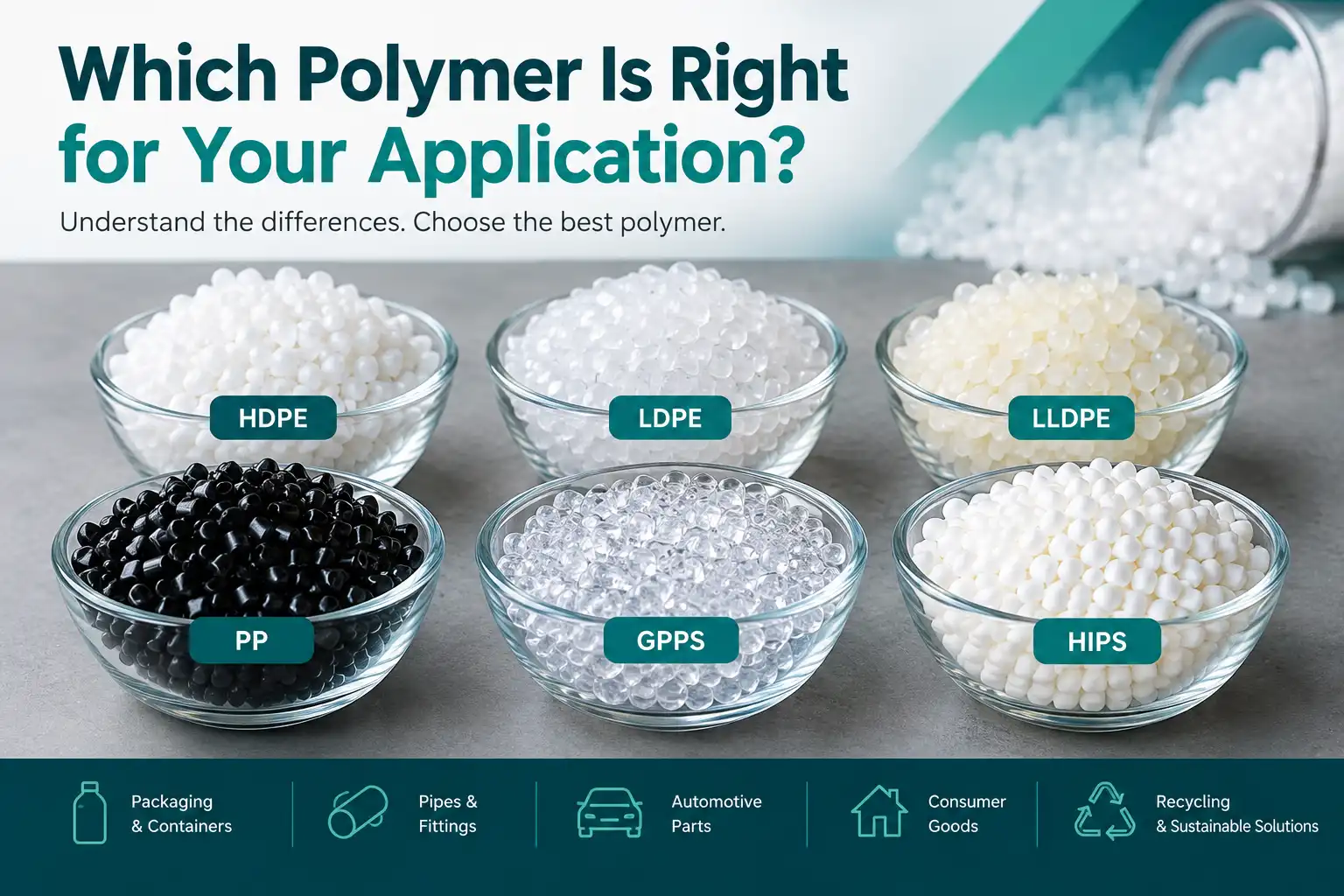
Which Polymer Is Right for Your Application? Choosing the right polymer is one of the most important decisions in plastic manufacturing. The selected material influences product quality, mechanical performance, processing efficiency, production costs, and the durability of the final product.
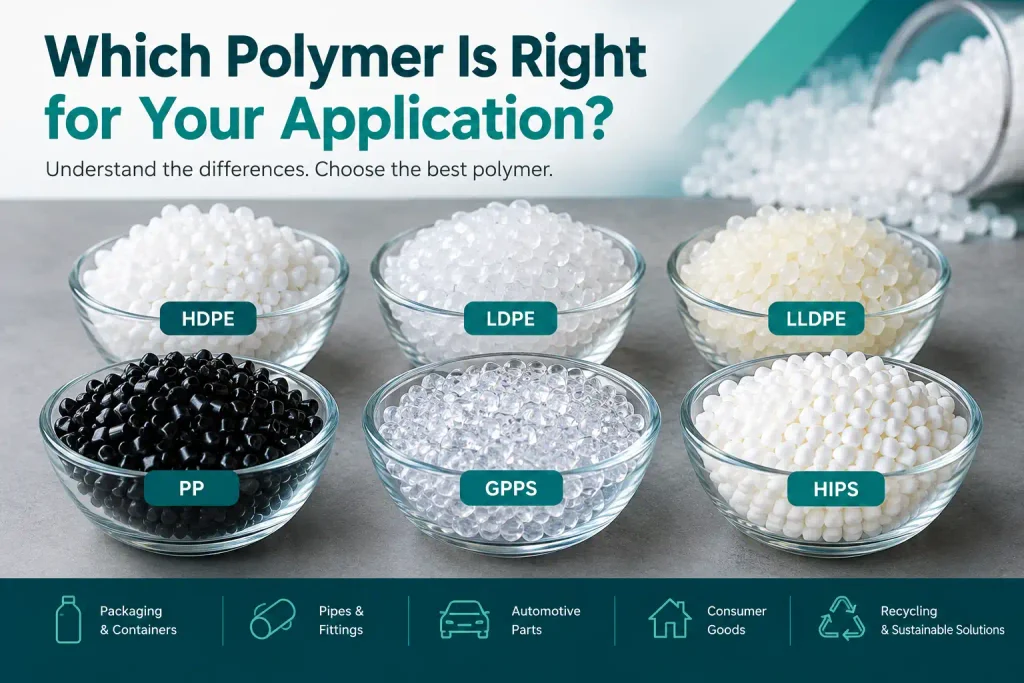
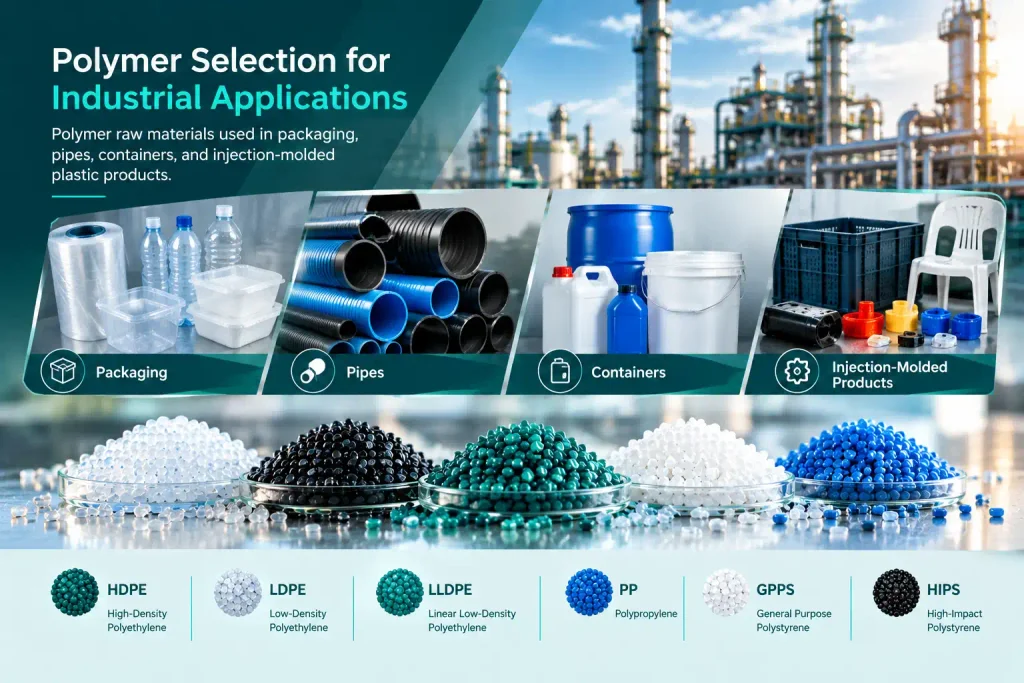
With numerous polymer types and hundreds of commercial grades available, identifying the most suitable material can be challenging. High-density polyethylene (HDPE), low-density polyethylene (LDPE), linear low-density polyethylene (LLDPE), polypropylene (PP), general-purpose polystyrene (GPPS), and high-impact polystyrene (HIPS) all offer distinct properties and advantages.
However, the best polymer is not necessarily the strongest, most expensive, or most widely used material. It is the polymer grade that meets your product specifications, processing requirements, and commercial objectives.
In this guide, we explain how to choose the right polymer for your application, compare commonly used materials, and identify the technical parameters that manufacturers should evaluate before purchasing polymer raw materials.
1. Start With Your Final Product Application
The first step in polymer selection is understanding the intended use of the finished product.
Different applications require different combinations of mechanical, thermal, chemical, and processing properties. A polymer suitable for flexible packaging may not be appropriate for a rigid container, while a grade used for injection-molded household products may not perform adequately in pipe extrusion.
Before selecting a polymer, consider the following questions:
- What product will you manufacture?
- Will the product be rigid, flexible, or semi-rigid?
- Will it be exposed to impact, pressure, chemicals, or outdoor conditions?
- What operating temperatures must it withstand?
- Does it require UV stabilization or other additives?
- What mechanical and dimensional properties are essential?
- What is your target production cost?
For example, a manufacturer producing flexible packaging film may prioritize puncture resistance, flexibility, and film processability. A producer of industrial containers may place greater emphasis on stiffness, impact resistance, chemical compatibility, and environmental stress crack resistance.
Defining these requirements before purchasing raw materials helps narrow the selection to grades that are technically and commercially appropriate.
2. Match the Polymer to Your Processing Method
The manufacturing process is another major factor in determining which polymer is right for your application.
Even when two polymers can produce similar products, their flow characteristics and processing behavior may differ significantly. Selecting an unsuitable grade can result in processing difficulties, inconsistent product dimensions, excessive scrap, or poor surface quality.
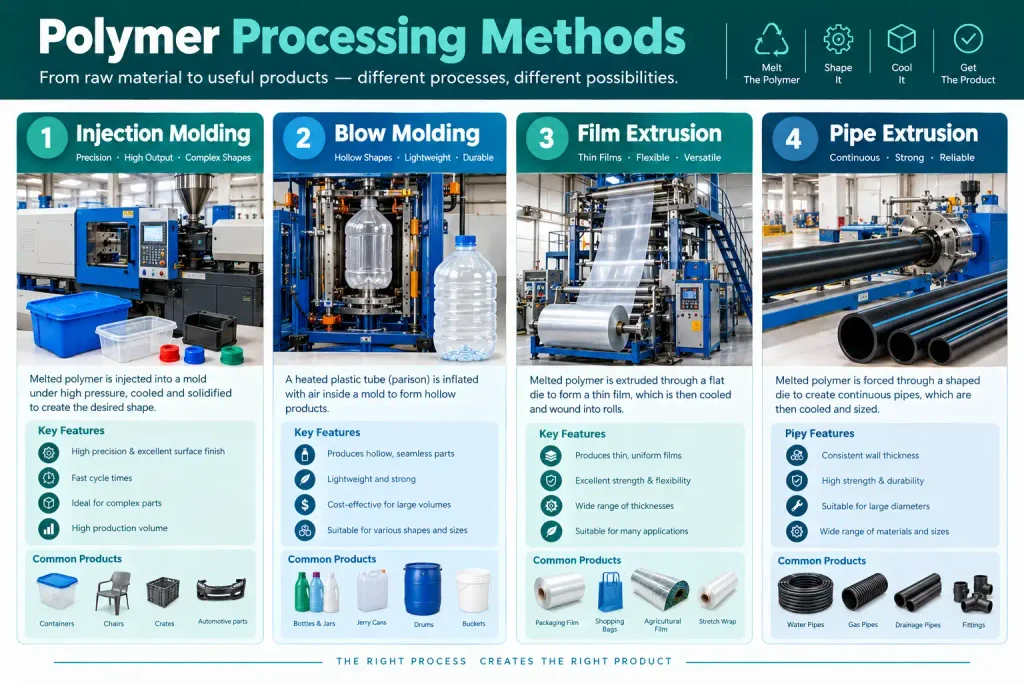
Injection Molding
Injection molding is widely used to manufacture household products, caps, closures, containers, technical components, and various consumer goods.
Common polymer options include:
- HDPE: Suitable for many rigid products requiring chemical resistance and toughness.
- PP: Used for a broad range of molded products where stiffness, chemical resistance, and application-specific thermal performance are important.
- GPPS: Often selected for rigid products requiring clarity, stiffness, and good surface appearance.
- HIPS: Used when greater impact resistance than conventional GPPS is required.
- LDPE: Suitable for selected applications requiring flexibility.
The appropriate grade depends on the mold design, product geometry, cycle time, required appearance, and mechanical specifications.
Blow Molding
Blow molding is used to manufacture hollow plastic products such as bottles, containers, drums, and selected industrial packaging products.
HDPE is widely used in blow molding because suitable grades can provide a useful combination of stiffness, toughness, and chemical resistance.
When choosing a blow molding grade, evaluate:
- Melt strength and processing stability
- Melt flow rate
- Environmental stress crack resistance
- Impact performance
- Container dimensions and wall thickness
- Chemical compatibility with the contents
The requirements for a small household container may differ considerably from those for a large industrial drum.
Film Extrusion
Film extrusion is used in shopping bags, liners, agricultural films, stretch films, and flexible packaging.
LDPE and LLDPE are widely used in this sector, although the preferred material depends on the film structure and performance requirements.
LDPE is commonly valued for flexibility, processability, and melt strength in suitable film applications.
LLDPE is often selected for its combination of tensile properties, puncture resistance, and flexibility.
Manufacturers may also use blends of different polyethylene grades to achieve a particular balance of processability, mechanical performance, and cost.
Pipe Extrusion
Pipe manufacturing requires careful selection of a polymer grade based on pressure requirements, operating conditions, dimensions, and applicable standards.
HDPE is widely used in water distribution, gas distribution, drainage, and industrial piping systems when the selected grade and pipe design meet the relevant requirements.
For pressure pipes, selecting a material solely by its polymer name is insufficient. Manufacturers must evaluate the specified pressure performance, long-term hydrostatic strength, processing requirements, and relevant certification or standards.
3. Compare the Most Common Polymer Types
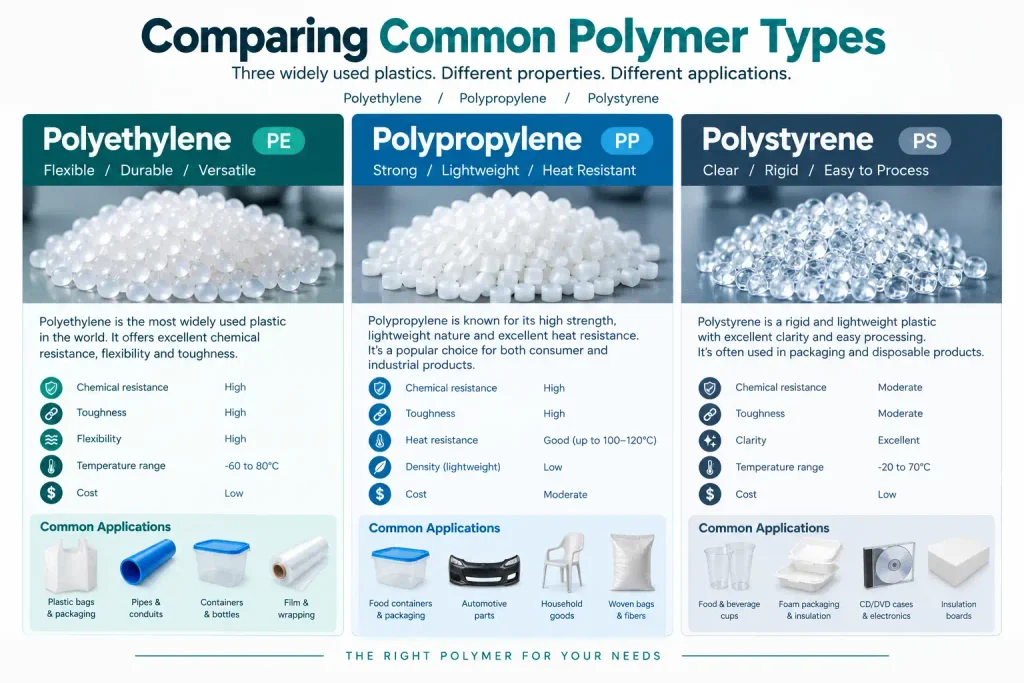
Understanding the differences between major polymer families makes it easier to identify suitable candidates for your product.
| Polymer | Main Characteristics | Common Applications | Important Considerations |
| HDPE | Generally rigid, strong, and chemically resistant | Containers, bottles, pipes, household products | Grade, stiffness, impact performance, ESCR, and processing method |
| LDPE | Flexible, relatively soft, and suitable for many film applications | Packaging films, liners, flexible products | Film properties, melt strength, and processability |
| LLDPE | Flexible, with good tensile and puncture performance in suitable grades | Stretch film, liners, bags, flexible packaging | Required film properties, blend compatibility, and extrusion conditions |
| PP | Generally offers good stiffness and chemical resistance | Injection-molded products, household goods, packaging, selected fibers | Impact performance, temperature requirements, and grade-specific properties |
| GPPS | Rigid, transparent, and relatively brittle | Transparent containers, display products, selected household items | Impact limitations and application requirements |
| HIPS | Greater impact resistance than conventional GPPS | Appliance components, housings, packaging, consumer products | Required impact strength, stiffness, and surface finish |
These are general material tendencies rather than guarantees. Actual performance depends on the grade formulation, additives, processing conditions, product design, and service environment.
For manufacturers evaluating commercial materials, technical documentation from established producers such as ExxonMobil Chemical, Dow, and LyondellBasell can provide useful information about polymer families and their intended applications.
4. Evaluate the Technical Properties of the Polymer Grade
Once you have identified a suitable polymer family, the next step is comparing individual grades.
Two HDPE grades, for example, may have different melt flow rates, densities, impact properties, and intended processing applications. The same is true of LDPE, LLDPE, PP, and other thermoplastics.
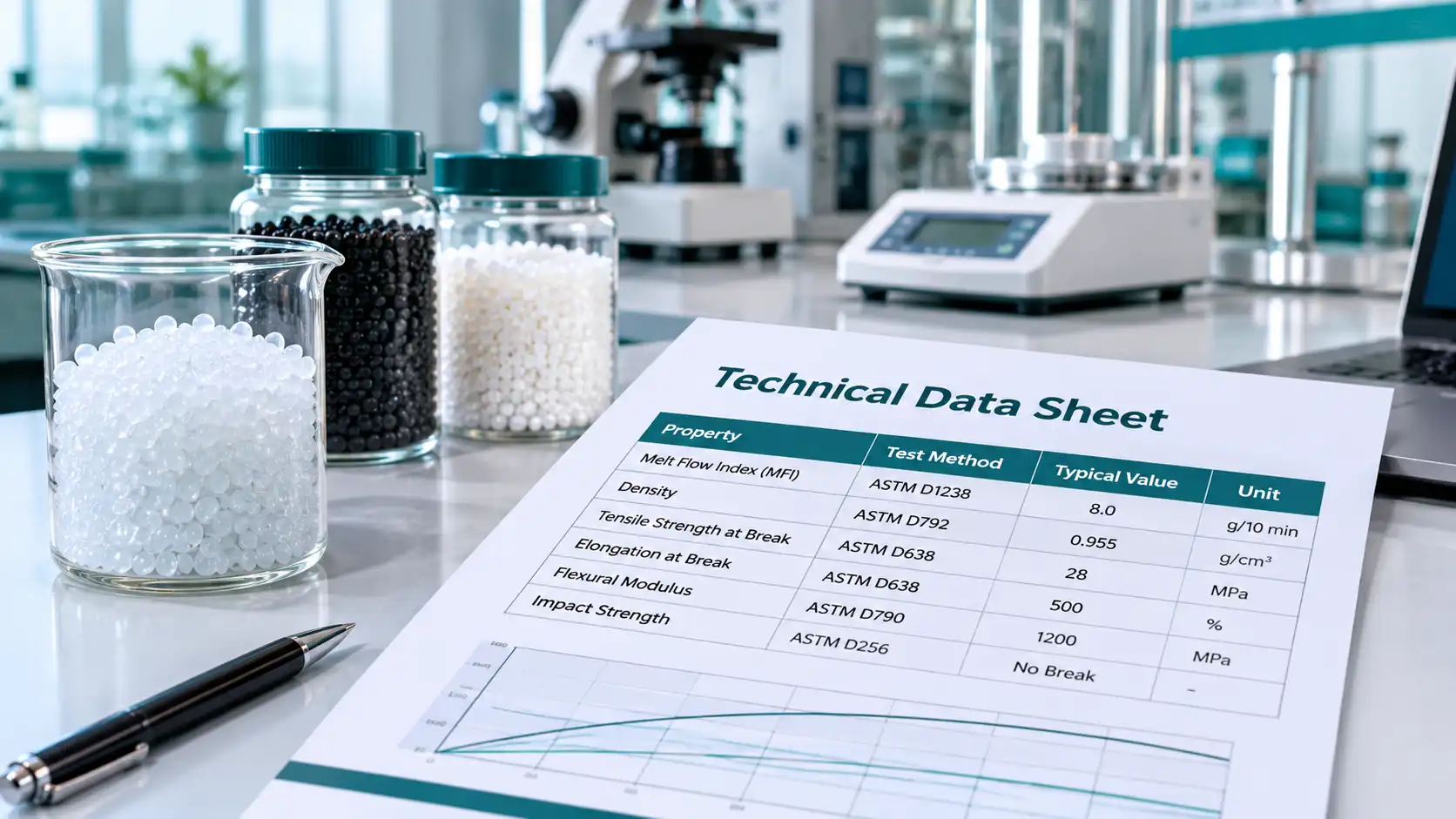
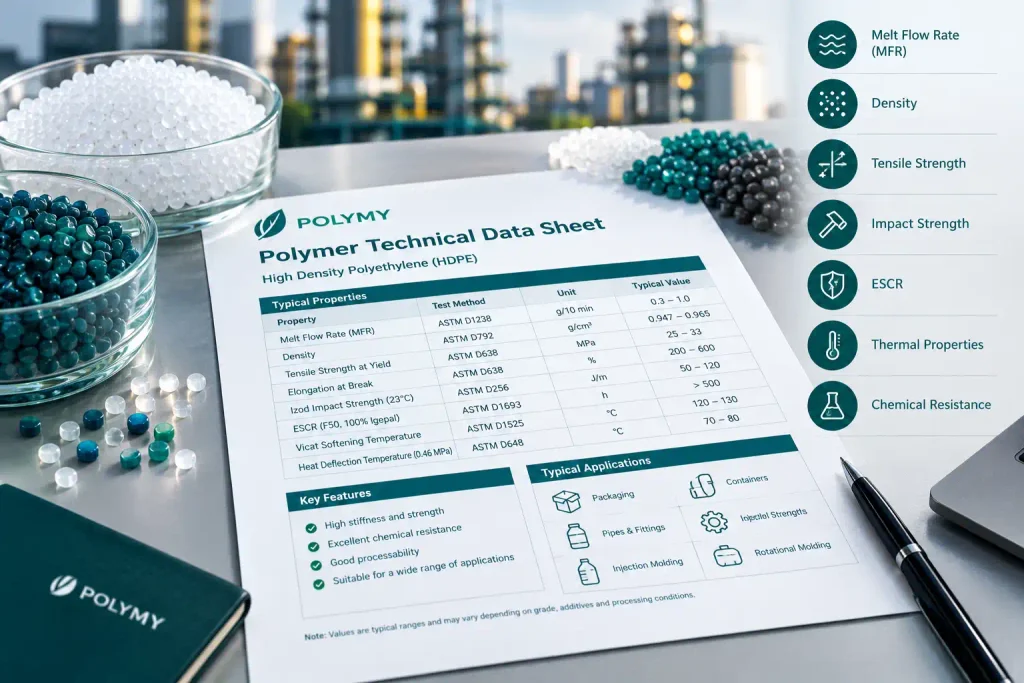
The technical data sheet (TDS) is therefore an essential document in the selection process.
Melt Flow Rate (MFR/MFI)
Melt flow rate indicates how much molten polymer flows under specified test conditions.
It is commonly used to help assess whether a grade is suitable for a particular processing method.
In general, higher melt flow rates indicate easier flow under the specified test conditions, while lower values often indicate greater resistance to flow. However, the relationship between melt flow rate and actual processability is not universal.
Always compare values measured under the same temperature and load conditions. A grade’s suitability must also be assessed against the equipment, product design, and processing requirements.
Density
Density is particularly relevant when comparing polyethylene grades.
It can influence stiffness and other material properties, but it should not be used as a standalone indicator of performance.
Two grades with similar densities can have different mechanical characteristics because of differences in molecular structure, comonomer content, additives, and manufacturing technology.
Impact Strength
Impact strength measures a material’s ability to withstand sudden loading under specified test conditions.
It is important for containers, household products, industrial components, and products that may be dropped or subjected to mechanical shocks.
The appropriate impact properties depend on the test method, temperature, product design, and expected service conditions.
Environmental Stress Crack Resistance (ESCR)
Environmental stress crack resistance describes a material’s resistance to cracking under the combined influence of mechanical stress and a particular environment.
It can be especially important in selected polyethylene applications, including detergent containers, chemical packaging, and certain industrial products.
For demanding applications, manufacturers should evaluate ESCR data alongside other mechanical and chemical compatibility requirements.
Thermal Properties
Thermal properties help determine whether a polymer can maintain the required performance under the temperatures encountered during processing and use.
Depending on the application, relevant measurements may include Vicat softening temperature, heat deflection temperature, melting behavior, and other grade-specific thermal data.
These measurements are not interchangeable. The appropriate test depends on the property that matters to the final product.
Additives and Stabilization
Some applications require more than a base polymer.
UV stabilizers, antioxidants, processing aids, pigments, and other additives may be needed to achieve specific performance or appearance requirements.
For outdoor applications, for example, UV stabilization may be important. For colored products, pigment compatibility and dispersion can influence appearance and consistency.
The key principle is to evaluate the complete grade specification—not simply the polymer family.
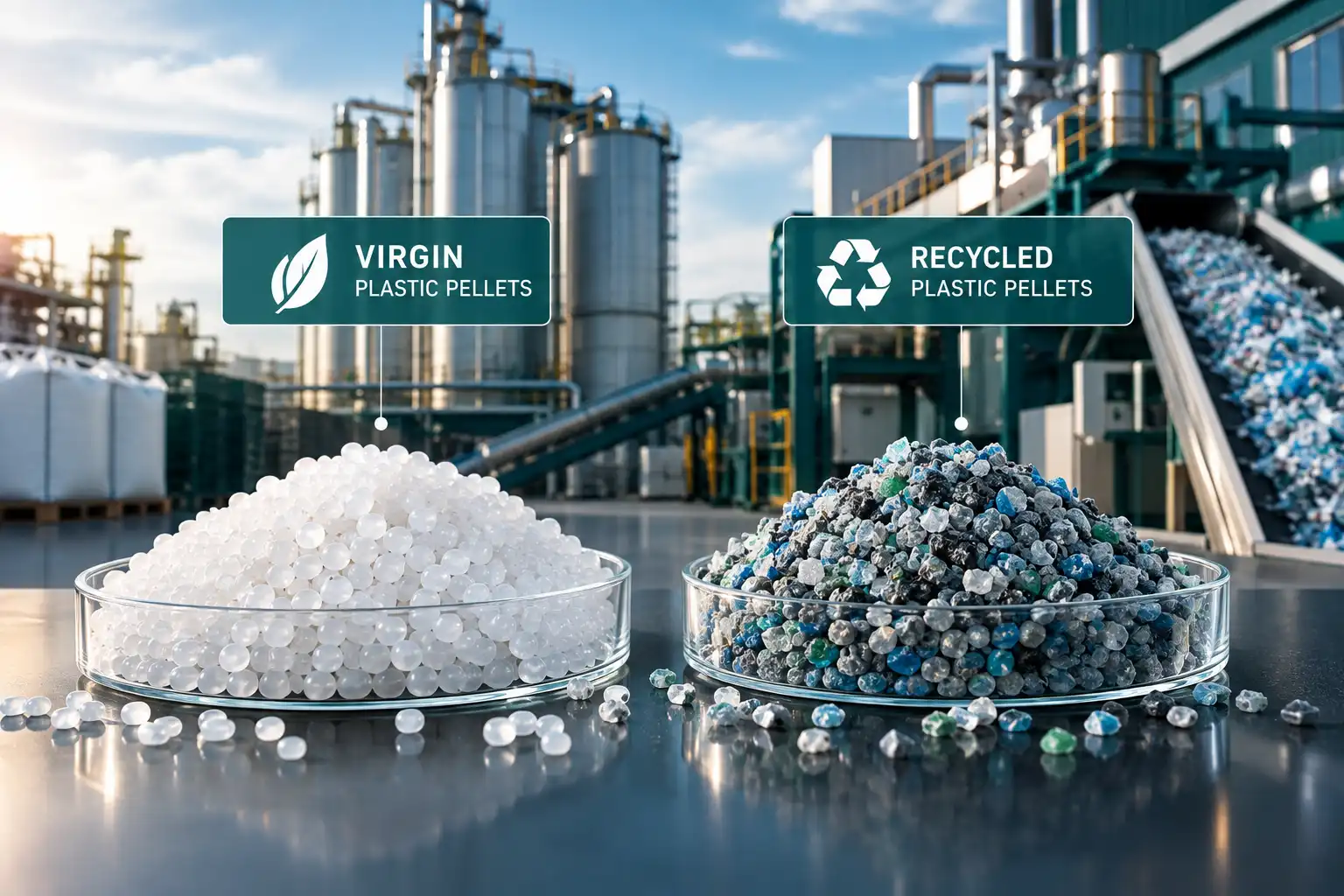
5. Should You Choose Virgin or Recycled Polymer?
The decision between virgin and recycled polymer depends on product requirements, quality expectations, regulations, and cost targets.
Virgin Polymer
Virgin polymer is produced from primary polymerization processes rather than recovered plastic waste.
Depending on the grade and supplier, it can offer predictable specifications and consistent processing behavior.
It is often preferred for applications that require tight material specifications, demanding mechanical performance, or controlled product quality.
However, virgin materials still require appropriate grade selection and incoming quality control.
Recycled Polymer
Recycled polymer is produced by recovering and processing plastic materials.
Its properties can vary depending on the original material, collection and sorting methods, contamination, degradation, and recycling technology.
Recycled materials may provide economic and environmental benefits when their properties meet the requirements of the intended application.
Before selecting recycled polymer, manufacturers should consider:
- Source and traceability
- Melt flow rate and consistency
- Contamination levels
- Mechanical properties
- Color and odor
- Processing stability
- Application-specific regulatory requirements
Virgin and Recycled Blends
Some manufacturers use controlled blends of virgin and recycled polymers to balance material cost, performance, and sustainability objectives.
The appropriate blend ratio depends on the required product properties and the consistency of the recycled feedstock.
Blending should be validated through suitable processing trials and product testing rather than based on cost considerations alone.
You can easily learn more about this topic by clicking the link below: “Virgin vs Recycled Plastic: Which Is Better for Industrial Applications?”
6. Why the Correct Polymer Grade Matters More Than the Polymer Name
One of the most common mistakes in raw material purchasing is selecting a polymer based only on its general classification.
For example, knowing that a product requires HDPE does not identify the correct grade. HDPE grades designed for film, injection molding, blow molding, and pressure pipes can have substantially different specifications.
The same principle applies to PP, LDPE, LLDPE, GPPS, and HIPS.
A reliable selection process should compare:
- The intended application
- The processing method
- Required mechanical properties
- Melt flow rate and density
- Thermal and chemical requirements
- Additive and stabilization needs
- Product quality specifications
- Price, availability, and supply consistency
For international buyers, supplier reliability, batch consistency, documentation, logistics, and delivery terms can also influence the commercial decision.
The objective is not simply to purchase a polymer at the lowest price. It is to secure a material that can be processed reliably and meet the finished product’s specifications at a competitive total cost.
7. An Interactive Polymer Selection Guide
An interactive polymer selection tool can help manufacturers narrow down potential materials before requesting technical or commercial recommendations.
For the POLYMY website, the tool could begin with a few straightforward questions.
Step 1: What Are You Manufacturing?
Choose an application:
- Flexible packaging film
- Rigid packaging
- Bottles and containers
- Pipes and fittings
- Household products
- Industrial components
- Polystyrene products
- Other applications
Step 2: Which Processing Method Do You Use?
Choose the relevant process:
- Film extrusion
- Injection molding
- Blow molding
- Pipe extrusion
- Thermoforming
- Other processing methods
Step 3: What Properties Matter Most?
Select your main requirements:
- High stiffness
- Flexibility
- Impact resistance
- Chemical resistance
- Puncture resistance
- Transparency
- Outdoor durability
- Low material cost
Step 4: Review Potential Polymer Families
Based on the answers, the tool can suggest suitable polymer families for further evaluation.
For example, a flexible packaging film application may lead to LDPE and LLDPE as initial candidates. An injection-molded rigid product may lead to HDPE, PP, GPPS, or HIPS, depending on the required properties.
These recommendations should be treated as a starting point—not a final technical approval. The specific grade must still be checked against the product specifications and processing conditions.
Step 5: Request a Grade Recommendation
The final step should allow users to submit their requirements to POLYMY.
Useful information includes the product, processing method, current grade, target specifications, monthly consumption, destination market, and preferred delivery terms.
This approach can help turn a general website visit into a qualified commercial inquiry.
8. How POLYMY Can Help You Select the Right Polymer
Choosing a suitable polymer involves balancing technical requirements with commercial considerations.
POLYMY supplies polymer raw materials and supports customers evaluating materials for applications across packaging, film production, injection molding, blow molding, piping, and other plastic manufacturing sectors.
Our product range includes HDPE, LDPE, LLDPE, GPPS, and selected polymer compounds and masterbatches.
When evaluating a potential material, we recommend starting with the customer’s actual production requirements rather than selecting a grade based only on its name or price.
To help identify suitable options, customers can provide:
- Application: The product being manufactured
- Processing method: Injection, blow molding, film extrusion, pipe extrusion, or another process
- Current material: The polymer grade currently being used, if applicable
- Technical requirements: Melt flow rate, density, impact properties, or other specifications
- Consumption: Estimated monthly or annual volume
- Destination: Delivery location and preferred commercial terms
Providing these details makes it easier to assess candidate grades and identify which technical documents or additional tests are needed.
Looking for the right polymer for your production line? Contact POLYMY to discuss your application and polymer raw material requirements.
Frequently Asked Questions (FAQ)
1. Which polymer is best for my application?
The best polymer depends on the final product, processing method, required mechanical properties, operating conditions, and cost target. HDPE, LDPE, LLDPE, PP, GPPS, and HIPS each offer different characteristics. Start by defining your product requirements, then compare the technical data sheets of suitable grades.
2. What is the difference between HDPE, LDPE, and LLDPE?
HDPE generally provides greater stiffness and is widely used in containers, pipes, and rigid products. LDPE is commonly used where flexibility and suitable film-processing characteristics are required. LLDPE is widely used in flexible packaging because suitable grades can provide a combination of flexibility, tensile strength, and puncture resistance.
The final choice depends on the specific grade and application.
3. Which polymer is best for plastic film?
LDPE and LLDPE are widely used for plastic film. LDPE is often valued for flexibility and processing characteristics, while LLDPE can provide good tensile and puncture resistance. Some film applications use blends of both materials to achieve the desired balance of properties.
The best choice depends on film thickness, end use, processing equipment, and performance specifications.
4. Which polymer is suitable for injection molding?
HDPE, PP, GPPS, and HIPS are among the polymers used in injection molding. HDPE and PP are common choices for many rigid products, while GPPS is suitable for applications requiring rigidity and transparency. HIPS may be preferred when greater impact resistance than GPPS is needed.
The specific grade must match the mold, product design, required surface finish, and processing conditions.
5. Which polymer should I use for blow molding?
HDPE is widely used in blow molding for bottles, containers, and industrial packaging. However, the correct grade depends on container size, wall thickness, impact requirements, chemical compatibility, and processing conditions.
For demanding applications, evaluate melt strength, ESCR, impact properties, and the manufacturer’s technical specifications.
6. How important is MFI when selecting a polymer?
MFI, also called melt flow rate (MFR), is an important indicator of polymer flow under specified test conditions. It helps manufacturers assess whether a grade may be suitable for their processing method.
However, MFI alone cannot determine suitability. Density, mechanical properties, molecular structure, processing conditions, and product requirements must also be considered.
7. Should I choose virgin or recycled polymer?
Virgin polymer can offer predictable specifications and consistent properties, depending on the grade and supplier. Recycled polymer may provide cost and sustainability benefits when its quality is suitable for the application.
The decision should consider material consistency, mechanical performance, contamination, processing stability, traceability, and applicable regulations.
8. Is the cheapest polymer grade always the best option?
No. A lower-priced material may increase production costs if it causes processing difficulties, product defects, excessive scrap, or inconsistent quality.
Manufacturers should consider the total cost of production, including material consumption, processing efficiency, quality control, waste, and product performance.
9. How do I compare two grades of the same polymer?
Compare their technical data sheets under consistent test conditions. Relevant parameters may include MFI/MFR, density, tensile strength, elongation, impact strength, ESCR, stiffness, and thermal properties.
Also verify that both grades are intended for the same processing method and application. Similar polymer classifications do not guarantee equivalent performance.
10. Can POLYMY help me find a suitable polymer grade?
POLYMY can discuss your application and polymer raw material requirements to help identify potential grades for further evaluation. To make the assessment more precise, provide your product type, processing method, current grade, target specifications, required volume, and destination market.
Final material selection should be confirmed against the manufacturer’s technical documentation and, where necessary, production trials and product testing.
Conclusion
Selecting the right polymer is a technical and commercial decision that directly influences product quality, manufacturing efficiency, and overall production costs.
Start by identifying your application and processing method. Then compare the relevant polymer families, evaluate the technical data sheets, and verify that the selected grade meets your product specifications.
HDPE, LDPE, LLDPE, PP, GPPS, and HIPS each serve different purposes. Understanding their characteristics can help you identify suitable candidates, but the final decision should always be based on the properties and performance of the specific grade.
For manufacturers sourcing polymer raw materials, the right selection process combines technical suitability, consistent supply, and competitive commercial terms.
Need help identifying the right polymer for your application? Contact POLYMY to discuss your requirements.