
Iranian polymer and Petrochemical for Russian Market
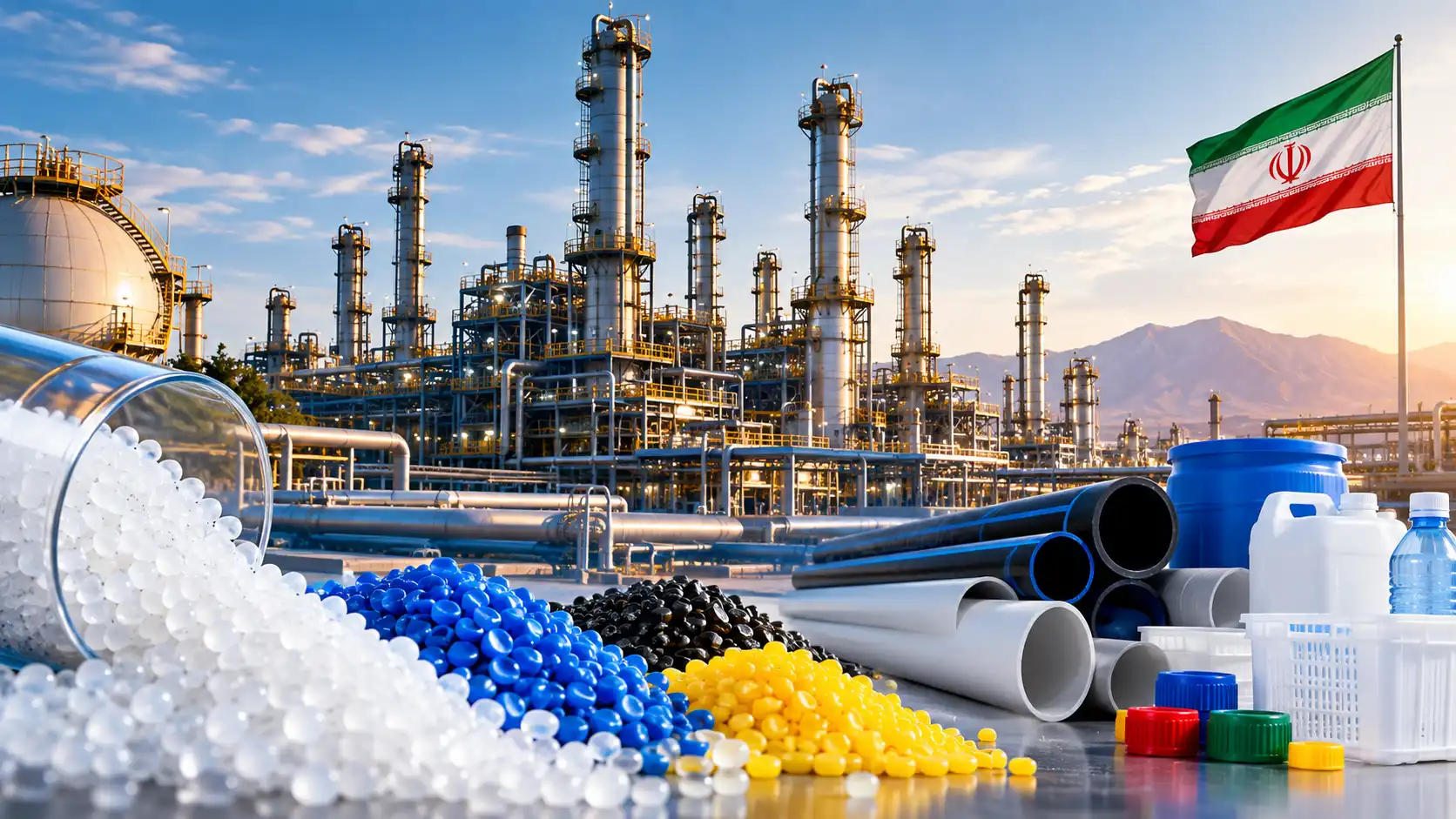
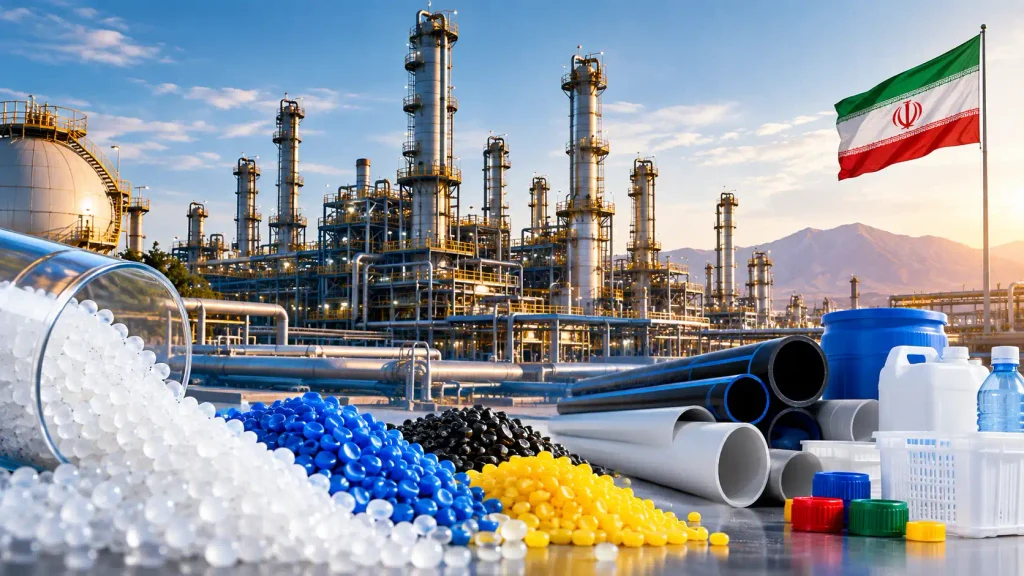
Russia’s plastics and polymer-processing industry has undergone significant changes in recent years as manufacturers have adapted to changing international trade routes, supplier networks and market conditions. Against this background, Iranian polymer and Petrochemical for Russian Market and Manufacturers have attracted increasing attention as an alternative regional supply source for polyethylene, polypropylene and other petrochemical raw materials.
Iran has one of the largest petrochemical industries in the Middle East, while Russia has a large downstream plastics-processing sector serving packaging, construction, automotive, agriculture, consumer products and industrial applications. The geographical proximity between the two countries, combined with established regional trade relationships, creates opportunities for cooperation in polymer raw materials.
However, Russia’s domestic polymer production is also substantial. Therefore, the opportunity for Iranian suppliers is not simply to replace Russian production, but to provide competitive grades, complementary materials and additional sourcing options where Russian processors require particular specifications, commercial conditions or supply flexibility.
Russian Polymer Market Creates Opportunities for Alternative Suppliers
The Russian polymer industry remains one of the largest plastics markets in the region. Preliminary industry data indicate that Russian production of the five major commodity polymers—polyethylene, polypropylene, PET, polystyrene and PVC—reached approximately 7.5 million tonnes in 2025. At the same time, consumption was approximately 6.6 million tonnes.
Polyethylene remains particularly important. Russian polyethylene production reached approximately 3.5 million tonnes in 2025, while domestic processing demand continued to support substantial consumption of HDPE, LDPE and LLDPE grades. Importantly, LLDPE has been one of the faster-growing polyethylene segments in Russia, with processing increasing significantly compared with 2021 levels.
This creates a market where manufacturers may require both domestic and imported polymer grades depending on application, quality requirements, pricing and availability.
Why Iranian Polymers Are Relevant to Russian Manufacturers
Iran offers several characteristics that can make its petrochemical products commercially attractive to Russian buyers.
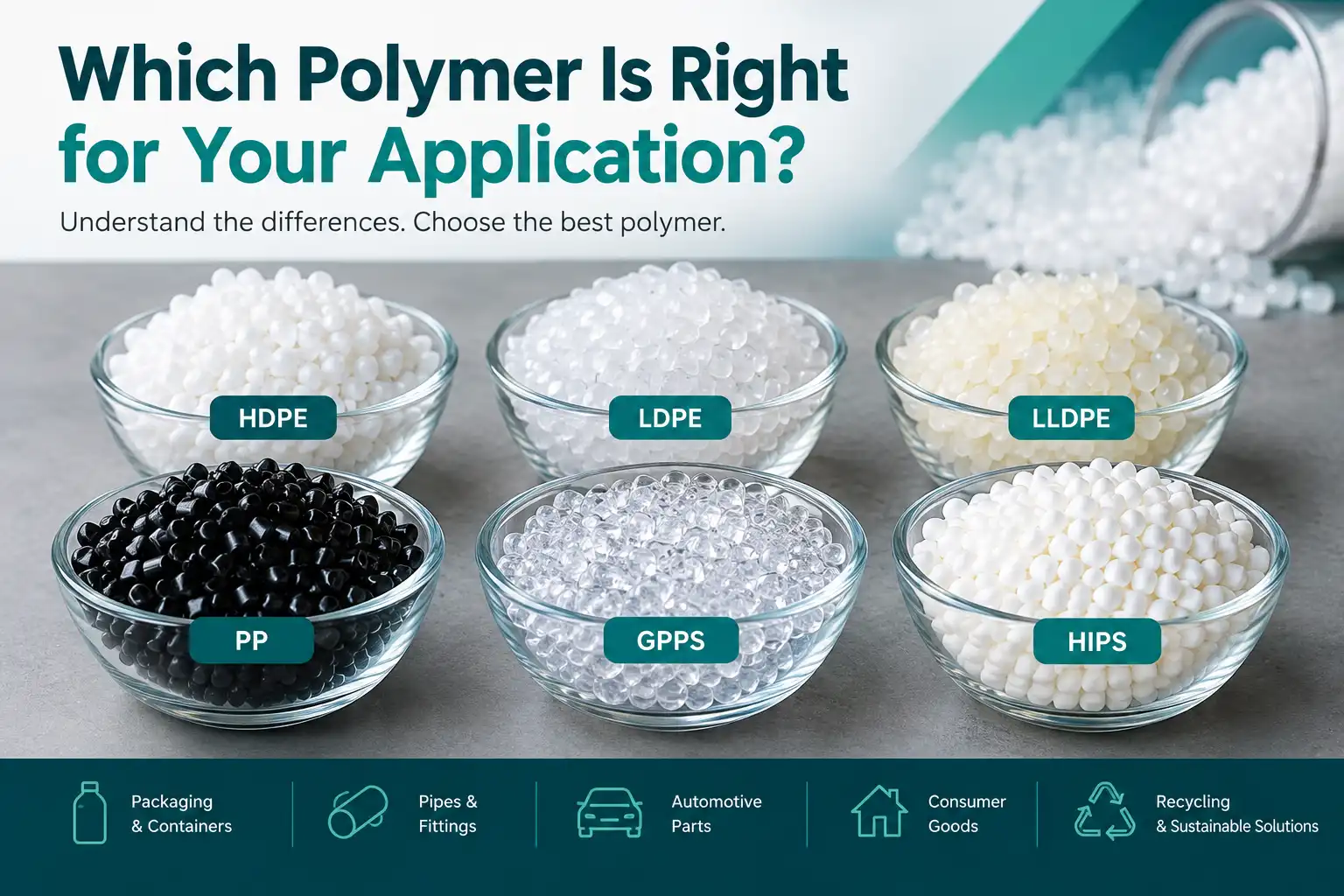
First is the country’s extensive petrochemical production base. Iranian producers manufacture a broad range of commodity polymers and petrochemical products, including HDPE, LDPE, LLDPE, polypropylene and polystyrene, as well as numerous specialized grades.
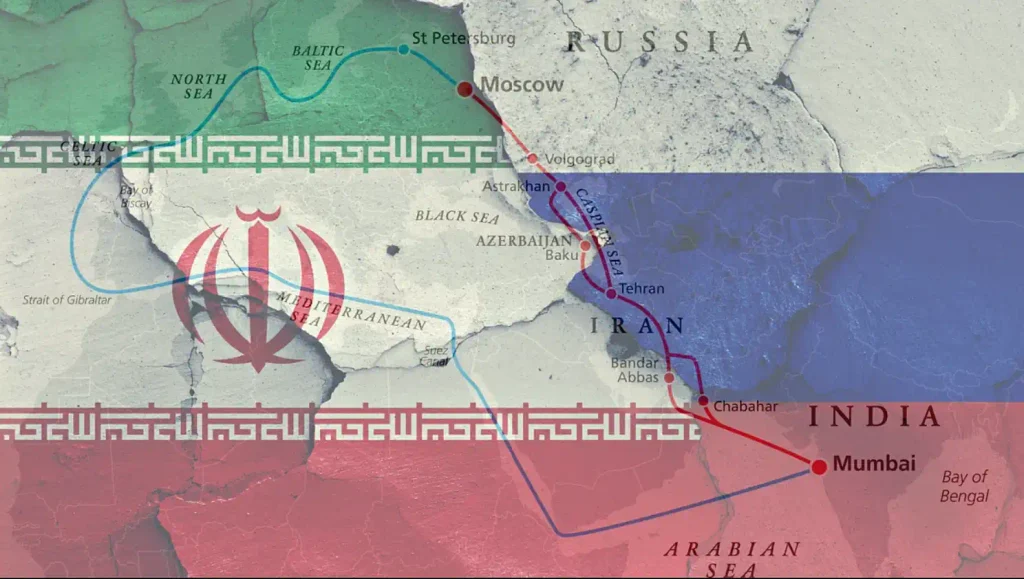
Second is Iran’s geographic position. The country provides a regional connection between the Middle East, Central Asia, the Caucasus and Russia. This can create alternative logistics options compared with traditional long-distance supply chains.
Third is product competitiveness. Iranian petrochemical producers operate with access to domestic hydrocarbon feedstocks, allowing the country to maintain a substantial petrochemical manufacturing sector.
Most importantly, Russian polymer processors have already demonstrated interest in Iranian raw materials. In 2024, the Russian Plastics Processors Association stated that significant quantities of polymer feedstock had been sourced from Iran and that Iranian material was becoming commercially attractive, while also describing the quality as good.
HDPE, LDPE and LLDPE for Russian Processing Industries
Among the most relevant Iranian materials for Russian manufacturers are polyethylene grades.
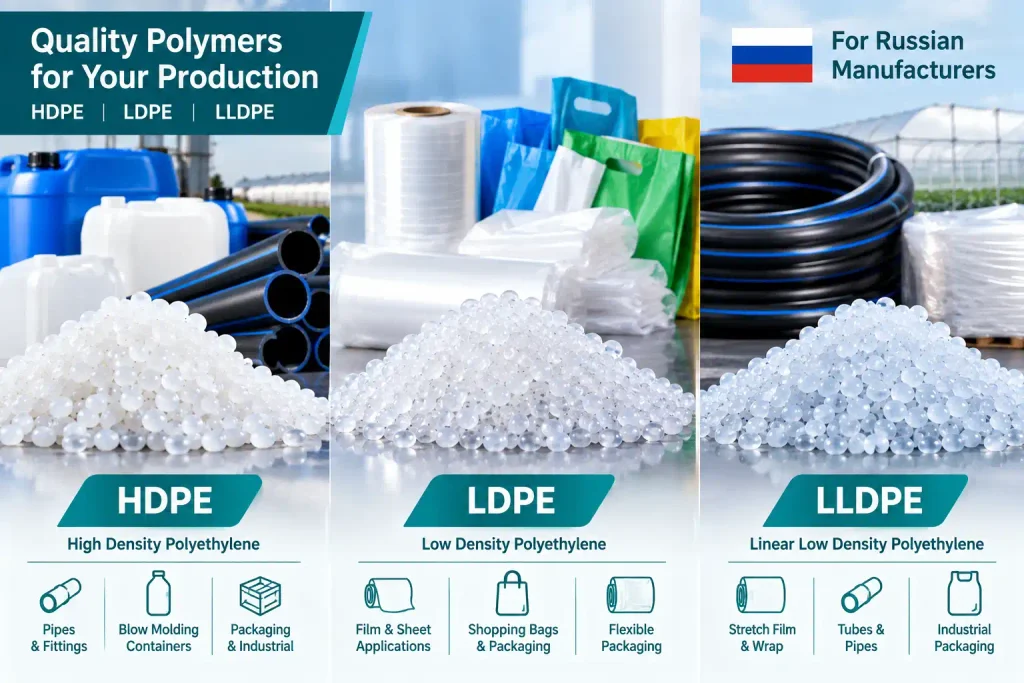
HDPE
HDPE (High-Density Polyethylene) is widely used in pipes, containers, bottles, packaging, blow molding, injection molding and industrial products.
Iranian HDPE grades can be relevant to Russian manufacturers looking for materials for applications such as:
- Blow-molded containers
- Industrial packaging
- Water and drainage pipes
- Household products
- Injection-molded components
- Large molded products
The exact suitability depends on melt flow rate, density, molecular-weight distribution, additives and the customer’s processing technology.
LDPE
LDPE (Low-Density Polyethylene) is particularly important for flexible packaging and film production.
Potential applications include:
- Packaging films
- Agricultural films
- Laminating films
- Industrial films
- Flexible bags
- General-purpose film products
Iranian LDPE grades can therefore complement Russian supply requirements where processors require specific film-processing characteristics or alternative sourcing options.
LLDPE
LLDPE represents another important opportunity. Russian market data indicate that LLDPE has been among the more dynamic polyethylene segments in recent years. Processing of LLDPE in Russia increased by more than 30% compared with 2021 according to industry estimates.
This makes LLDPE particularly relevant for Iranian suppliers targeting Russian film manufacturers.
Typical applications include stretch film, packaging film, agricultural film and other flexible polyethylene products.
Polypropylene and Other Petrochemical Materials
Iranian supply opportunities extend beyond polyethylene.
Polypropylene (PP) is widely used in packaging, woven products, automotive components, household goods, injection molding and industrial applications.
Russian polypropylene production remains substantial, but import channels continue to exist for particular grades and commercial requirements. Preliminary data indicate Russian PP production of approximately 2.02 million tonnes in 2025, while consumption was around 1.47 million tonnes.
Iranian PP can therefore be considered as an additional sourcing option where the required grade, specification and commercial conditions match the requirements of Russian processors.
Other petrochemical products may also be relevant depending on the application, including polystyrene, PVC-related products, masterbatches, additives and specialized polymer compounds.
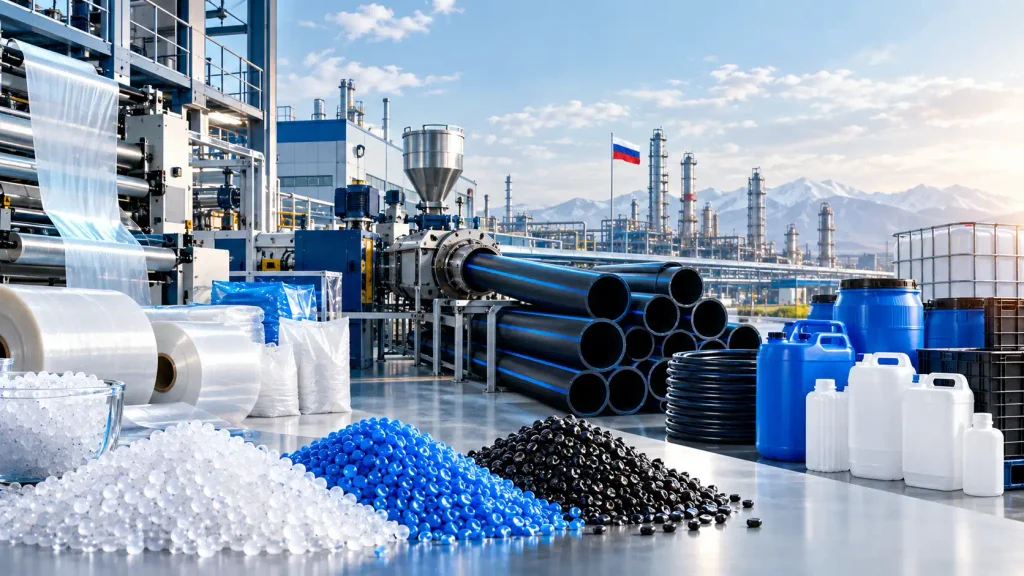
Competitive Pricing and Supply Diversification
One of the strongest arguments for considering Iranian polymer materials is supplier diversification.
Russian manufacturers have significantly changed their international sourcing structure since 2022. Industry data show that imports of polyethylene and polypropylene from distant foreign markets declined substantially between 2020 and 2025, while the composition and geographical direction of imports changed. At the same time, China and neighboring countries have become increasingly important suppliers.
This environment makes alternative regional suppliers strategically valuable.
For a Russian manufacturer, having access to multiple sources can reduce dependence on a single supplier and provide greater flexibility when market prices, freight rates or availability change.
Iran can potentially participate in this diversified supply structure, particularly for competitive commodity grades and customized polymer compounds.
Logistics and Commercial Considerations
The commercial attractiveness of Iranian polymers cannot be evaluated based on material price alone.
Russian buyers typically need to consider:
- Product specification
- Certificate of Analysis (COA)
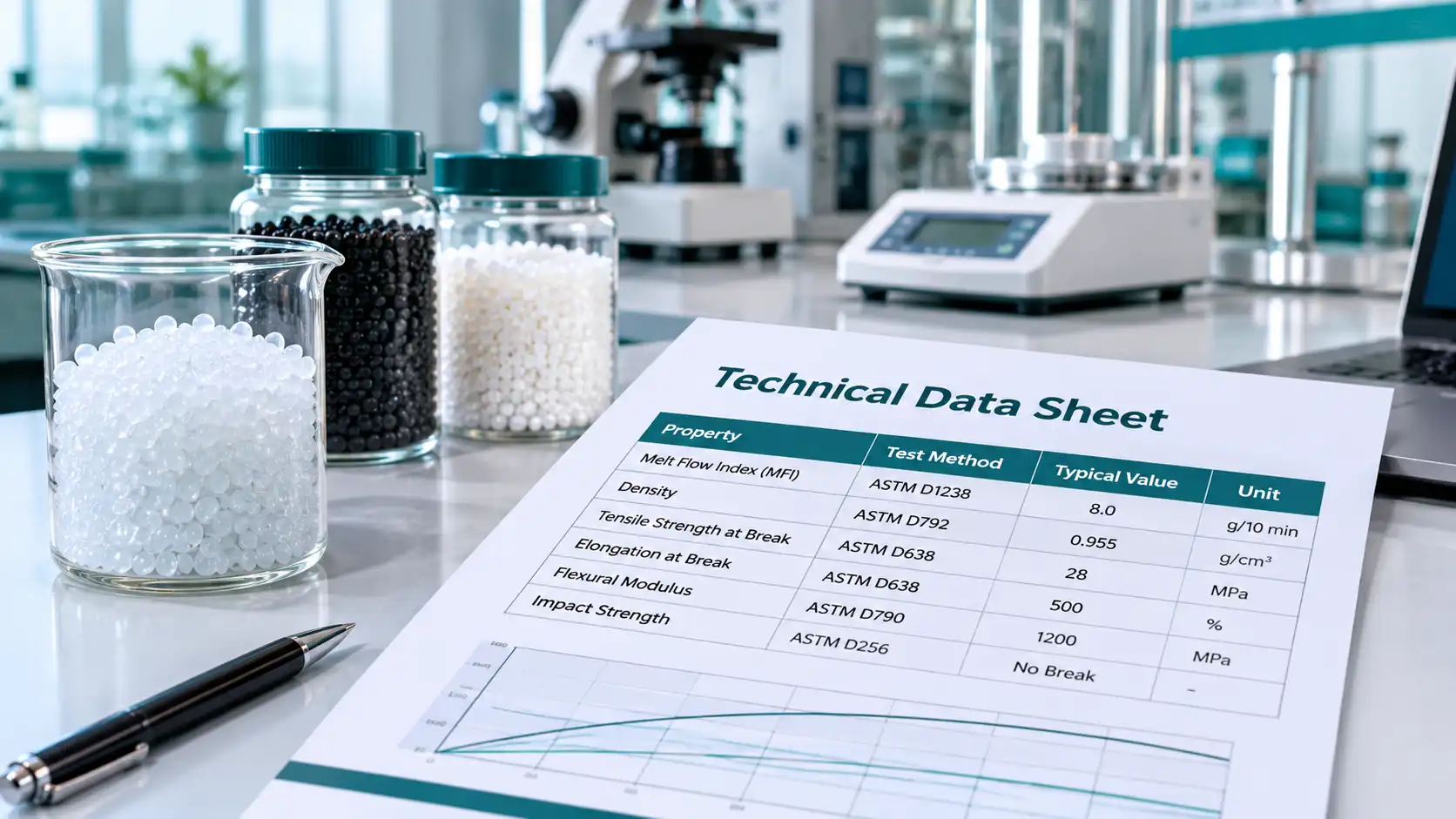
- Technical Data Sheet (TDS)
- Packaging
- Loading location
- Transportation route
- Freight costs
- Customs requirements
- Payment arrangements
- Delivery time
- Applicable sanctions and trade restrictions
These factors can significantly influence the final landed cost.
For Iranian suppliers targeting Russia, reliable documentation and transparent communication are therefore essential. The ability to provide consistent grades and coordinate logistics can be as important as offering a competitive polymer price.
Iranian Polymer Compounds Can Add Further Value
An additional opportunity lies in polymer compounds and masterbatches.
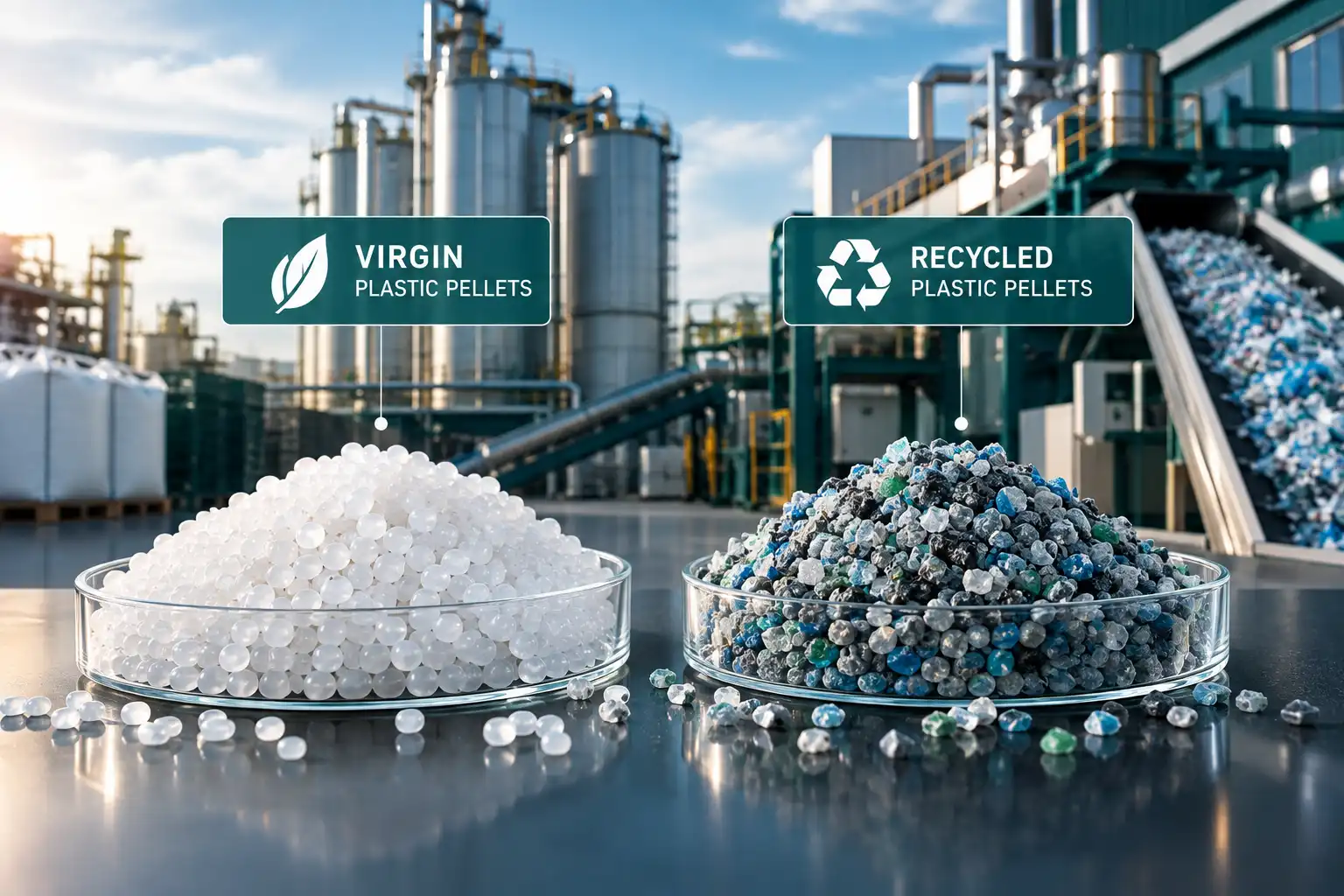
Instead of supplying only virgin resin, Iranian manufacturers and suppliers can develop application-specific compounds based on HDPE, LDPE, LLDPE or PP.
For Russian processors, this can offer advantages such as:
- Improved processing performance
- UV resistance
- Antioxidant protection
- Enhanced mechanical properties
- Consistent color
- Application-specific formulations
For example, polyethylene compounds can be developed for pipe, film, blow molding or injection applications. This allows suppliers to move from commodity polymer trading toward higher-value technical solutions.
Supply Chain Resilience Is Becoming More Important
Recent developments in global petrochemical markets have demonstrated how quickly geopolitical events can affect polymer availability and transportation costs. The 2026 disruption to petrochemical flows through the Strait of Hormuz, for example, contributed to tighter global supplies and significant volatility in polyethylene and polypropylene markets.
For Russian manufacturers, regional diversification can therefore become an important component of supply-chain planning.
Iran’s geographical position and petrochemical production capacity give it the potential to play a role in this diversification, subject to applicable trade, sanctions, customs and transportation requirements.
Outlook for Iranian Polymer Supply to Russia
The opportunity for Iranian polymer and petrochemical materials in Russia is likely to remain focused on competitive grades, complementary supply and specific application requirements rather than replacing Russia’s substantial domestic production.
Russian polymer production has continued to expand in several segments, including polyethylene and polypropylene. At the same time, import channels remain relevant for specific grades and materials.
For Iranian producers and suppliers, success in the Russian market will depend on more than competitive pricing. Consistent quality, reliable logistics, technical support, documentation and an understanding of Russian manufacturers’ specific processing requirements will be critical.
Conclusion
Iranian polymer materials for Russian manufacturers represent an important potential supply opportunity within the changing Eurasian petrochemical trade landscape. HDPE, LDPE, LLDPE and PP can serve a wide range of Russian applications, from packaging and film production to pipes, injection molding, blow molding and industrial products.
Iran’s established petrochemical production capacity, regional location and history of polymer supply to Russian processors provide a foundation for further commercial cooperation. For Russian manufacturers, Iranian suppliers can offer another source of polymer raw materials and compounds, while Iranian producers can gain access to a large industrial market.
The most competitive suppliers will ultimately be those capable of combining consistent polymer quality, competitive pricing, dependable logistics, complete technical documentation and professional international supply-chain management.
Frequently Asked Questions
Why are Iranian polymers important for Russian manufacturers?
Iranian polymers can provide Russian processors with an additional regional source of polyethylene, polypropylene and other petrochemical materials, supporting supplier diversification and potentially competitive procurement.
Which Iranian polymers are relevant to Russia?
Important categories include HDPE, LDPE, LLDPE and polypropylene, as well as selected polymer compounds, masterbatches and other petrochemical products.
Is there already a history of Iranian polymer supply to Russia?
Yes. The Russian Plastics Processors Association reported that significant quantities of polymer feedstock had been sourced from Iran and described Iranian supply as increasingly advantageous and good in quality.
Why is LLDPE particularly interesting for the Russian market?
Russian industry data indicate that LLDPE processing has been one of the faster-growing polyethylene segments in recent years, creating opportunities for competitive suppliers of suitable LLDPE grades.
What should Russian buyers check when sourcing Iranian polymers?
Buyers should evaluate the exact polymer grade, TDS, COA, packaging, consistency, logistics, landed cost, customs requirements and all applicable trade and sanctions restrictions before purchasing.