
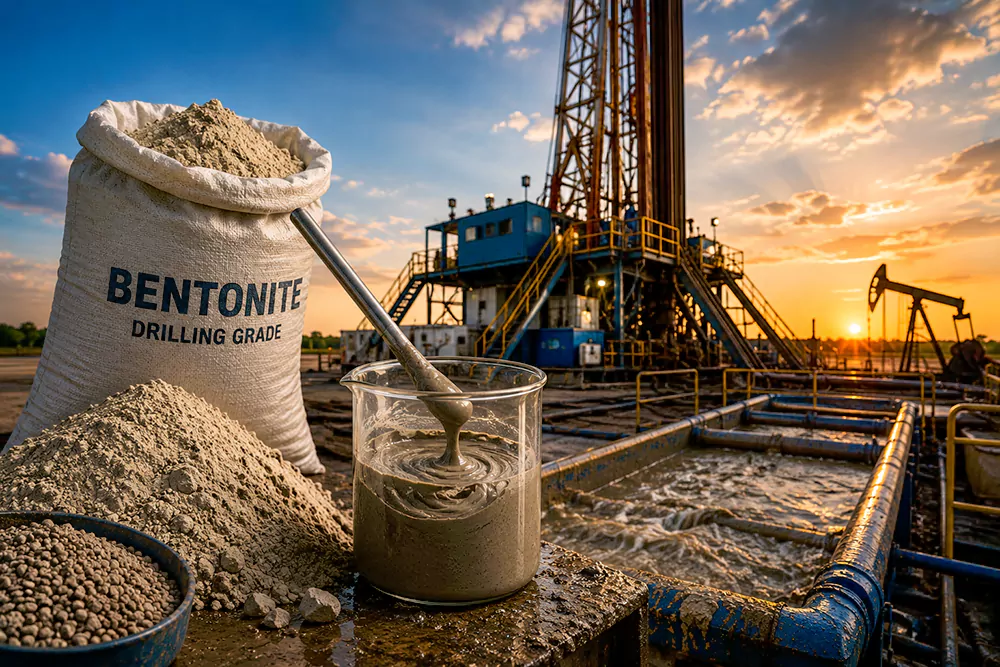
Bentonite has become one of the most important industrial minerals in the oil and gas sector due to its exceptional performance in drilling fluid systems. Known for its remarkable swelling capacity, viscosity, and filtration control properties, bentonite plays a critical role in improving drilling efficiency, maintaining wellbore stability, and reducing operational risks.
From conventional oil wells to complex directional drilling projects, bentonite-based drilling fluids are widely used to support safe, efficient, and cost-effective drilling operations. Understanding how bentonite functions in drilling systems helps operators optimize performance while minimizing downtime and environmental impact.
What Is Bentonite?
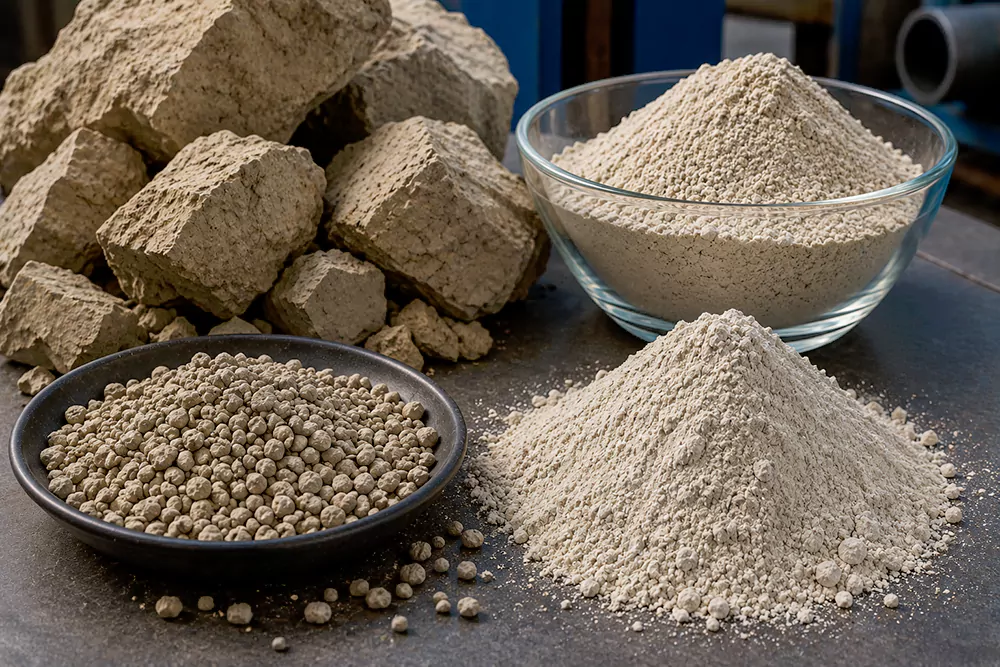
Bentonite is a naturally occurring absorbent clay primarily composed of montmorillonite, a mineral belonging to the smectite group. It forms from the weathering of volcanic ash over millions of years and is valued for its ability to absorb water and expand significantly.
Depending on its dominant exchangeable cation, bentonite is generally classified into:
- Sodium Bentonite
- Calcium Bentonite
Among these, sodium bentonite is the preferred choice for oil drilling because of its superior swelling, suspension, and viscosity characteristics.
Why Bentonite Is Essential in Oil Drilling
Oil drilling involves penetrating thousands of meters through varying geological formations under extreme pressure and temperature conditions. Without a properly designed drilling fluid, operations become significantly more difficult and hazardous.
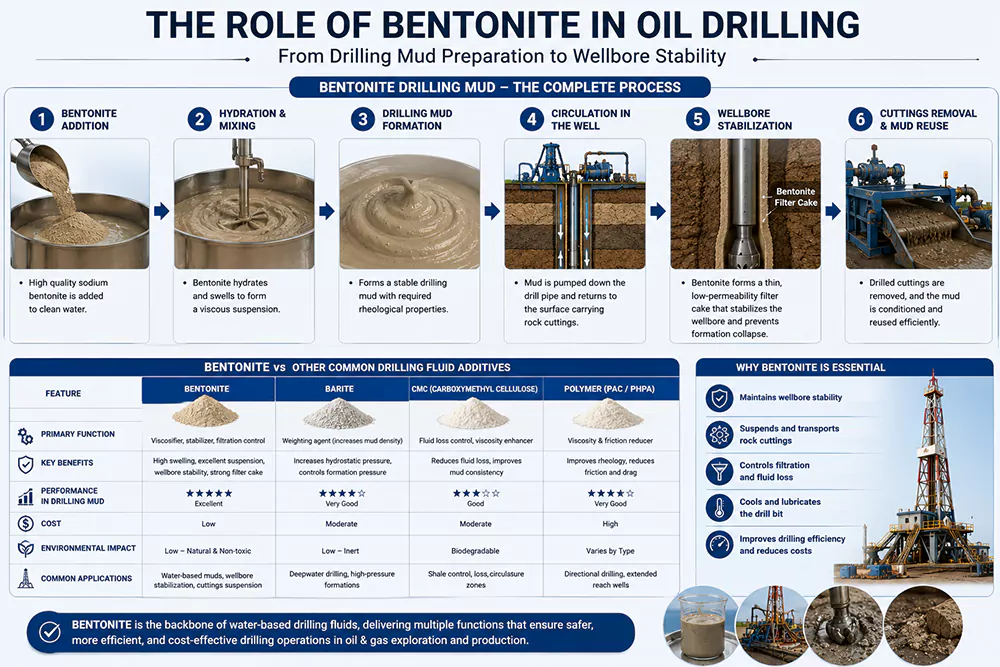
Bentonite serves as one of the primary components of water-based drilling muds because it provides multiple functions simultaneously.
Its benefits include:
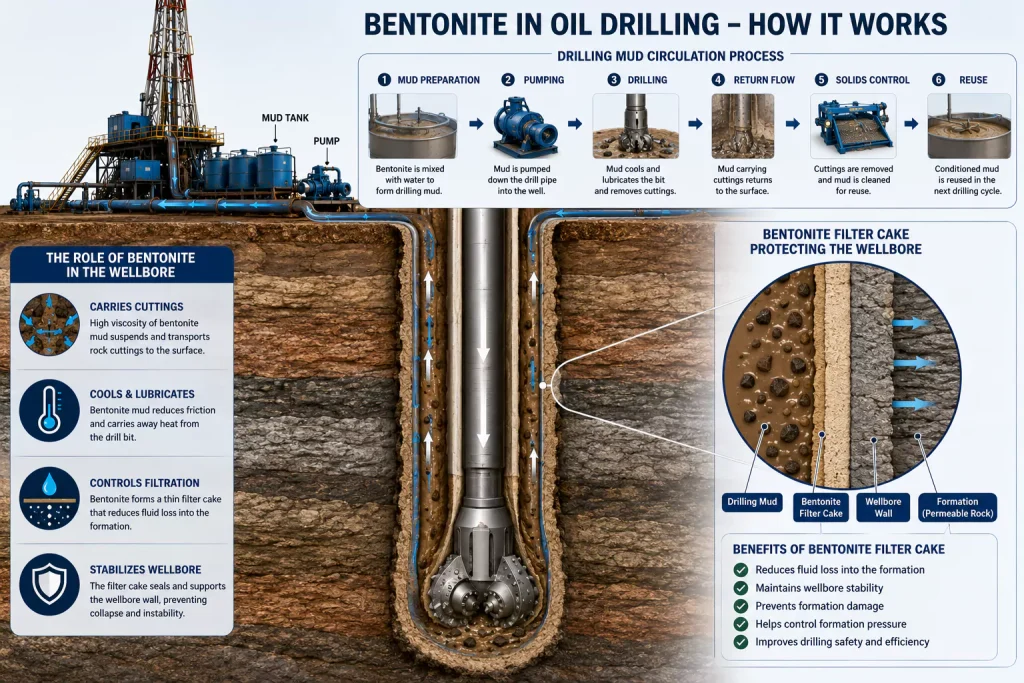
- Maintaining wellbore stability
- Suspending drill cuttings
- Cooling and lubricating drill bits
- Controlling fluid loss
- Preventing borehole collapse
- Reducing drilling costs
- Improving drilling efficiency
Main Uses of Bentonite in Oil Drilling
1. Drilling Mud Preparation
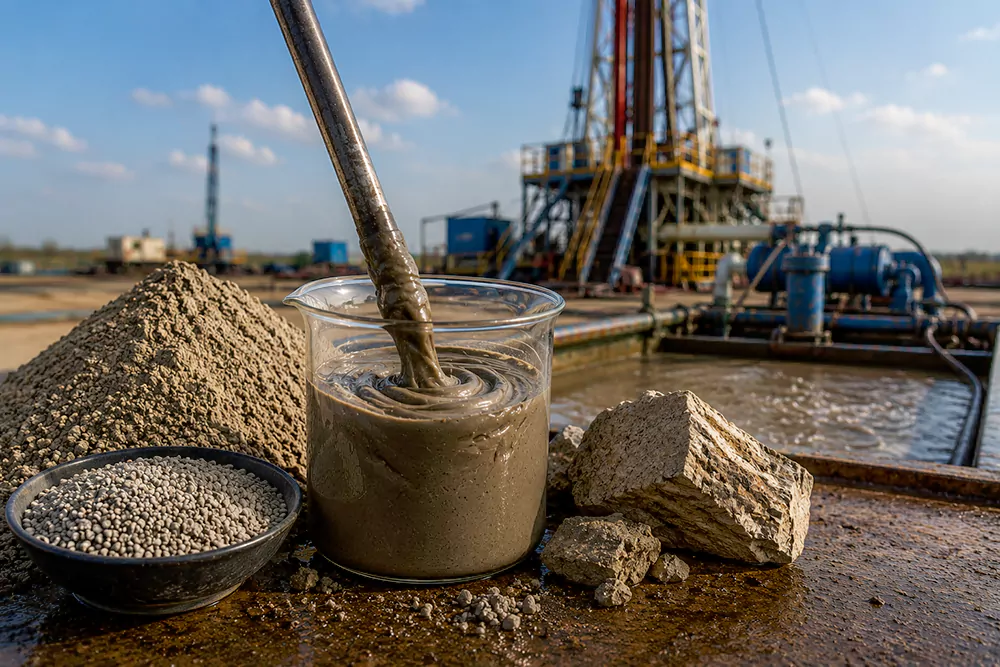
The most common application of bentonite is in the production of water-based drilling mud.
When mixed with water, bentonite forms a stable, viscous fluid capable of transporting drilled rock fragments from the bottom of the well to the surface.
A properly formulated drilling mud improves overall drilling performance while protecting drilling equipment.
2. Wellbore Stabilization
One of the greatest challenges during drilling is preventing the collapse of unstable geological formations.
Bentonite creates a thin, low-permeability filter cake along the wellbore walls. This protective layer strengthens the borehole and minimizes the risk of wall failure.
Stable wellbores contribute to:
- Reduced downtime
- Lower drilling risks
- Improved operational safety
- Better drilling accuracy
3. Suspension of Drill Cuttings
As drilling progresses, rock fragments continuously accumulate at the drill bit.
The viscosity created by bentonite keeps these particles suspended within the drilling fluid until they can be circulated to the surface.
Efficient cuttings transport prevents:
- Pipe sticking
- Equipment damage
- Reduced drilling speed
- Wellbore blockage
4. Cooling and Lubricating the Drill Bit
Drill bits operate under extremely high friction and temperatures.
Bentonite-based drilling fluids circulate continuously around the drill bit, carrying heat away while reducing friction between the drilling assembly and surrounding rock formations.
This extends tool life and reduces maintenance costs.
5. Fluid Loss Control
Excessive fluid penetration into porous formations can negatively affect drilling performance.
Bentonite significantly reduces filtration losses by forming a dense filter cake that seals permeable rock layers.
Effective filtration control helps maintain drilling pressure while minimizing mud consumption.
6. Pressure Control
Drilling fluids generate hydrostatic pressure that counteracts formation pressures encountered underground.
Bentonite contributes to maintaining the proper density and rheological properties required for safe pressure management.
Proper pressure control helps prevent:
- Blowouts
- Formation damage
- Well instability
- Fluid influx
Key Properties That Make Bentonite Ideal for Oil Drilling
Several physical and chemical characteristics make bentonite one of the most valuable drilling additives.
High Swelling Capacity
Sodium bentonite can absorb several times its own weight in water, producing highly stable drilling fluids.
Excellent Viscosity
Its ability to increase fluid viscosity improves cuttings suspension and enhances circulation efficiency.
Superior Filtration Control
Bentonite forms a compact filter cake that minimizes water loss into surrounding formations.
High Plasticity
Its plastic nature allows drilling fluids to maintain consistent flow properties under varying operating conditions.
Chemical Stability
Bentonite remains effective across a broad range of drilling environments and temperatures.
API Bentonite for Drilling Applications
Not all bentonite deposits are suitable for oil drilling.
The petroleum industry commonly requires API-grade bentonite, which complies with specifications established by the American Petroleum Institute (API).
API bentonite is tested for:
- Yield
- Viscosity
- Fluid loss
- Moisture content
- Particle size distribution
- Swelling capacity
Using certified API-grade bentonite ensures consistent drilling fluid performance across demanding drilling operations.
Advantages of Using Bentonite in Oil Drilling
High-quality bentonite provides numerous operational and economic benefits.
These include:
- Improved drilling efficiency
- Lower drilling fluid consumption
- Reduced equipment wear
- Enhanced wellbore stability
- Better cuttings removal
- Lower maintenance costs
- Increased drilling safety
- Improved productivity
- Reduced operational downtime
These advantages explain why bentonite remains one of the most widely used minerals in drilling fluid systems worldwide.
Factors to Consider When Selecting Drilling Bentonite
Choosing the right bentonite significantly affects drilling performance.
Important selection criteria include:
- Swelling index
- Viscosity
- API compliance
- Moisture content
- Purity
- Particle size
- Yield performance
- Formation compatibility
Working with an experienced supplier ensures consistent quality and reliable field performance.
Future Trends in Bentonite-Based Drilling Fluids
As drilling technology advances, bentonite continues to evolve through improved processing techniques and optimized drilling fluid formulations.
Current industry trends include:
- High-performance bentonite blends
- Environmentally friendly drilling fluids
- Low-toxicity additives
- Improved filtration control systems
- Enhanced rheology modifiers
- Sustainable mineral processing
- Digital drilling fluid monitoring
These innovations help drilling companies improve operational efficiency while reducing environmental impact.
Frequently Asked Questions
Why is bentonite used in oil drilling?
Bentonite is used because it increases drilling fluid viscosity, stabilizes wellbores, transports drill cuttings, controls filtration, and cools the drill bit during drilling operations.
What type of bentonite is used in drilling mud?
Sodium bentonite is the most commonly used type due to its excellent swelling capacity and superior rheological properties.
What is API bentonite?
API bentonite is drilling-grade bentonite that meets the quality standards established by the American Petroleum Institute for oil and gas drilling fluids.
Can bentonite reduce drilling costs?
Yes. High-quality bentonite improves drilling efficiency, reduces equipment wear, minimizes downtime, and lowers overall operational costs.
Conclusion
Bentonite is an indispensable component of modern oil and gas drilling operations, providing essential functions such as wellbore stabilization, cuttings suspension, fluid loss control, pressure management, and drill bit cooling. Its unique physical and chemical properties make it one of the most effective and economical materials for water-based drilling fluids, helping operators achieve safer, more efficient, and more reliable drilling performance.
POLYMY supplies high-quality drilling-grade bentonite for oil and gas applications, offering consistent quality and reliable performance to meet the demanding requirements of drilling contractors and industrial customers worldwide. Whether for water-based drilling muds or other industrial applications, POLYMY is committed to delivering bentonite solutions that support operational efficiency and long-term project success.