
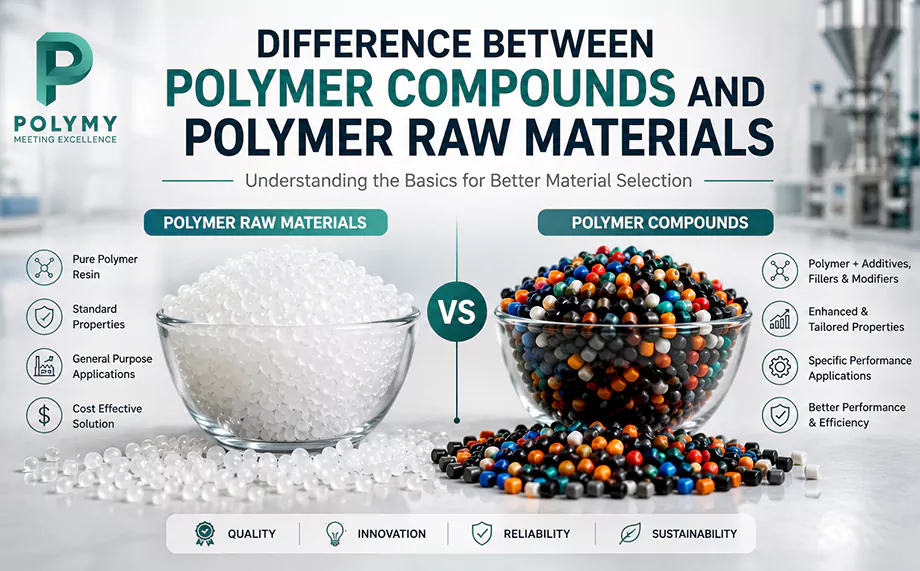
The plastics industry depends on a broad range of materials, from standard polymer resins to highly engineered compounds designed for specialized applications. While the terms polymer raw materials and polymer compounds are sometimes used interchangeably, they represent two distinct categories of materials with different compositions, manufacturing processes, properties, and applications.
Understanding the differences between these materials helps manufacturers, converters, and product designers choose the most suitable option for improving product performance, optimizing production efficiency, and reducing overall manufacturing costs.
What Are Polymer Raw Materials?
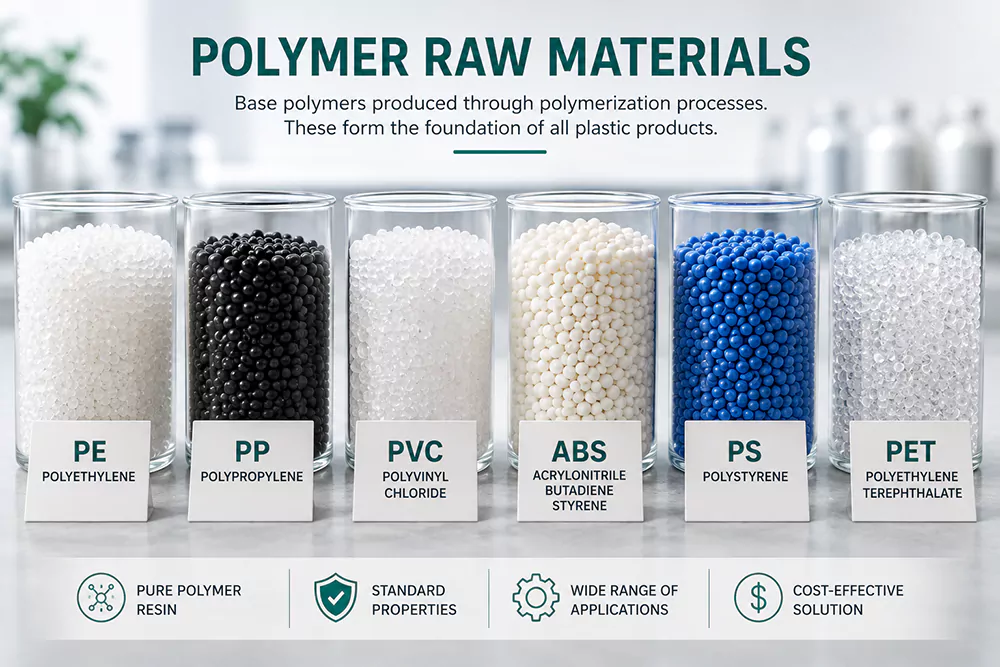
Polymer raw materials are the base resins produced through the polymerization of monomers. They serve as the primary building blocks for manufacturing plastic products and can either be processed directly or modified through compounding to achieve enhanced performance.
Some of the most widely used polymer raw materials include:
- Polypropylene (PP)
- Polyethylene (PE)
- Polyvinyl Chloride (PVC)
- Polystyrene (PS)
- Acrylonitrile Butadiene Styrene (ABS)
- Polycarbonate (PC)
- Polyamide (PA)
- Polyethylene Terephthalate (PET)
These materials generally contain few or no performance-enhancing additives and exhibit the standard characteristics of their respective polymer families.
Key Characteristics of Polymer Raw Materials
- Manufactured directly through polymerization
- Usually supplied as pellets or granules
- Suitable for general-purpose plastic processing
- Consistent and standardized material grades
- Can be customized later through compounding
What Are Polymer Compounds?
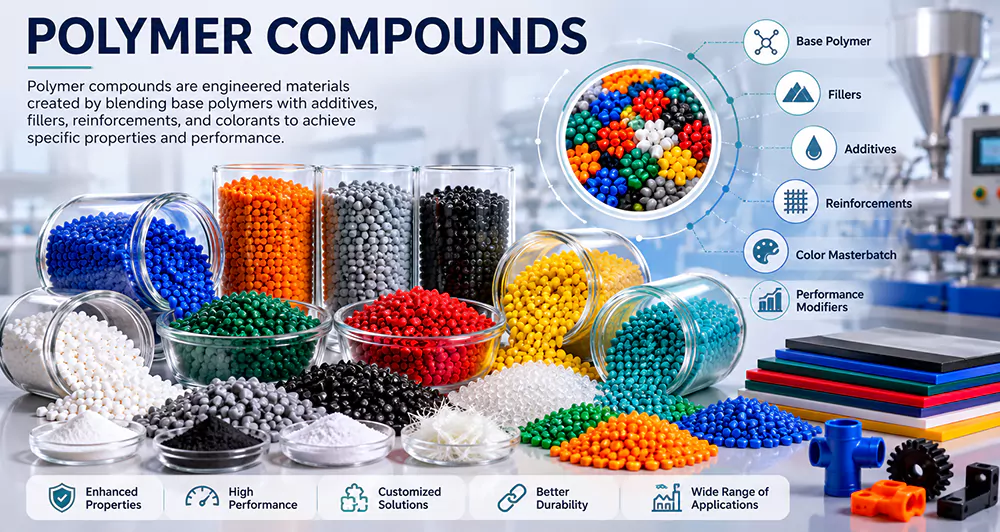
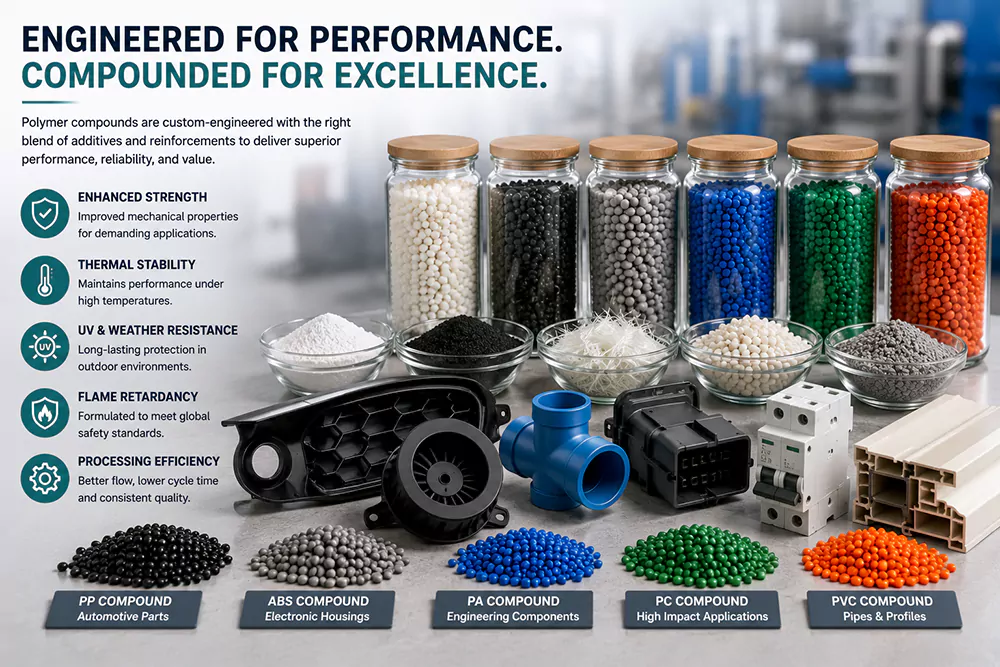
Polymer compounds are engineered materials produced by blending a base polymer with carefully selected additives, fillers, reinforcements, pigments, and processing aids. The compounding process modifies the properties of the original resin to satisfy specific technical and commercial requirements.
Depending on the intended application, polymer compounds may contain:
- Mineral fillers
- Glass fibers
- UV stabilizers
- Flame retardants
- Antioxidants
- Impact modifiers
- Lubricants
- Processing aids
- Color masterbatches
- Functional additives
These ingredients are uniformly dispersed into the polymer matrix using advanced compounding equipment, most commonly twin-screw extruders.
Polymer Compounds vs. Polymer Raw Materials
| Feature | Polymer Raw Materials | Polymer Compounds |
| Composition | Pure polymer resin | Polymer combined with additives and fillers |
| Production Method | Polymerization | Compounding process |
| Mechanical Properties | Standard | Customized and enhanced |
| Color | Natural or transparent | Available in customized colors |
| UV Resistance | Limited | Can be significantly improved |
| Flame Resistance | Standard | Can be formulated as flame-retardant |
| Processing | General-purpose | Optimized for specific applications |
| Applications | Broad industrial use | Application-specific industries |
Why Manufacturers Choose Polymer Compounds
As industries demand higher performance materials, polymer compounds have become increasingly important because they provide characteristics that standard polymer resins cannot achieve alone.
Enhanced Mechanical Performance
Glass fibers, mineral fillers, and impact modifiers improve tensile strength, stiffness, impact resistance, and dimensional stability.
Better Thermal Performance
Heat stabilizers and engineering additives enable compounds to perform under elevated temperatures.
Improved Chemical Resistance
Special formulations provide excellent resistance against oils, fuels, solvents, and aggressive chemicals.
UV Protection
UV stabilizers increase the lifespan of products exposed to sunlight and harsh outdoor environments.
Flame Retardancy
Flame-retardant compounds help manufacturers comply with international fire safety standards for electrical, automotive, and construction applications.
Better Processing Efficiency
Processing aids improve melt flow, reduce cycle times, and enhance production consistency during extrusion and injection molding.
Common Types of Polymer Compounds
Different industries require different formulations depending on performance requirements.
PP Compounds
Widely used in automotive components, furniture, packaging, and household appliances.
PE Compounds
Suitable for pipes, cable insulation, industrial containers, and agricultural applications.
PVC Compounds
Commonly used in electrical cables, medical devices, flooring, window profiles, and construction materials.
Engineering Polymer Compounds
Produced from engineering plastics such as PA, PC, ABS, and PBT to provide superior mechanical and thermal performance.
Applications of Polymer Raw Materials and Polymer Compounds
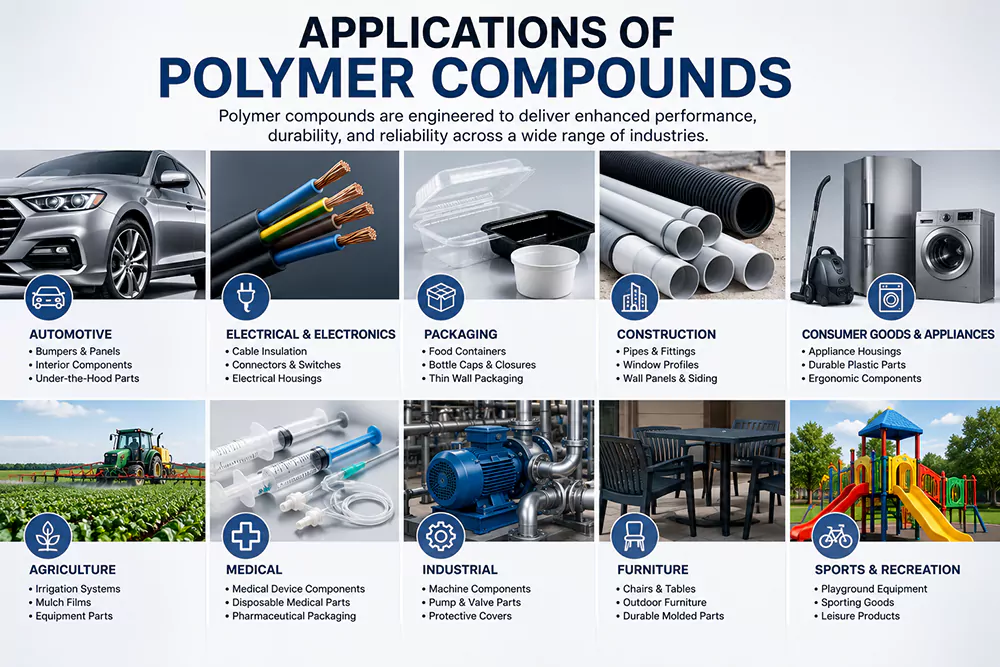
Both material categories play essential roles across multiple industries.
Typical applications include:
- Automotive manufacturing
- Electrical and electronics
- Packaging
- Construction
- Medical devices
- Agriculture
- Consumer goods
- Household appliances
- Industrial equipment
- Pipe and fitting production
While polymer raw materials are suitable for standard applications, polymer compounds are preferred when higher performance, durability, and specialized functionality are required.
How Polymer Compounds Are Manufactured
Polymer compounding involves a carefully controlled manufacturing process that ensures uniform distribution of all ingredients.
The process generally includes:
- Selecting the appropriate base polymer.
- Designing the formulation.
- Measuring additives and fillers.
- High-speed premixing.
- Melt compounding using twin-screw extrusion.
- Cooling and pelletizing.
- Quality control testing.
- Packaging and shipment.
Strict quality control throughout each stage ensures consistent product performance and processing reliability.
Which Material Is Right for Your Application?
Choosing between polymer raw materials and polymer compounds depends on the technical requirements of your product.
Polymer raw materials are generally preferred when:
- Standard resin properties are sufficient.
- Material modification will be performed internally.
- Basic plastic products are being manufactured.
Polymer compounds are the better choice when applications require:
- Higher mechanical strength
- Improved thermal stability
- Enhanced UV resistance
- Flame retardancy
- Better processing efficiency
- Customized colors
- Longer service life
Although polymer compounds often have a higher initial purchase price, they frequently reduce total production costs by improving manufacturing efficiency, minimizing defects, and extending product durability.
Future Trends in Polymer Compounding
Innovation continues to reshape the polymer industry as manufacturers seek more sustainable and higher-performance materials.
Current trends include:
- Sustainable polymer compounds
- Bio-based polymers
- Recyclable compound formulations
- Lightweight automotive materials
- Conductive compounds
- High-performance engineering plastics
- Low-carbon manufacturing technologies
These developments are expected to drive continued growth in customized polymer compounds across global industries.
Frequently Asked Question
What is the difference between polymer compounds and polymer raw materials?
Polymer raw materials are base polymer resins produced through polymerization, while polymer compounds are engineered materials created by combining those resins with additives, fillers, and reinforcements to improve specific properties.
Why are polymer compounds used instead of raw materials?
Polymer compounds offer enhanced mechanical, thermal, chemical, and processing properties that standard polymer resins cannot provide on their own.
Are polymer compounds more expensive?
Their purchase price may be higher, but they often reduce overall manufacturing costs through better processing performance, lower waste, and improved product quality.
Can polymer raw materials be customized?
Yes. Polymer raw materials can be modified through the compounding process to create customized formulations for specific industrial applications.
Conclusion
Choosing between polymer raw materials and polymer compounds depends on the performance requirements of your application, manufacturing process, and long-term production goals. While raw materials provide the foundation for plastic manufacturing, polymer compounds deliver enhanced mechanical, thermal, and processing properties that help manufacturers produce higher-quality and more durable products.
As a trusted global supplier, POLYMY provides high-quality polymer raw materials, polymer compounds, and masterbatches tailored to the needs of industries such as automotive, packaging, construction, consumer goods, and industrial manufacturing. By delivering reliable materials and consistent quality, POLYMY helps customers achieve greater production efficiency and product performance.